
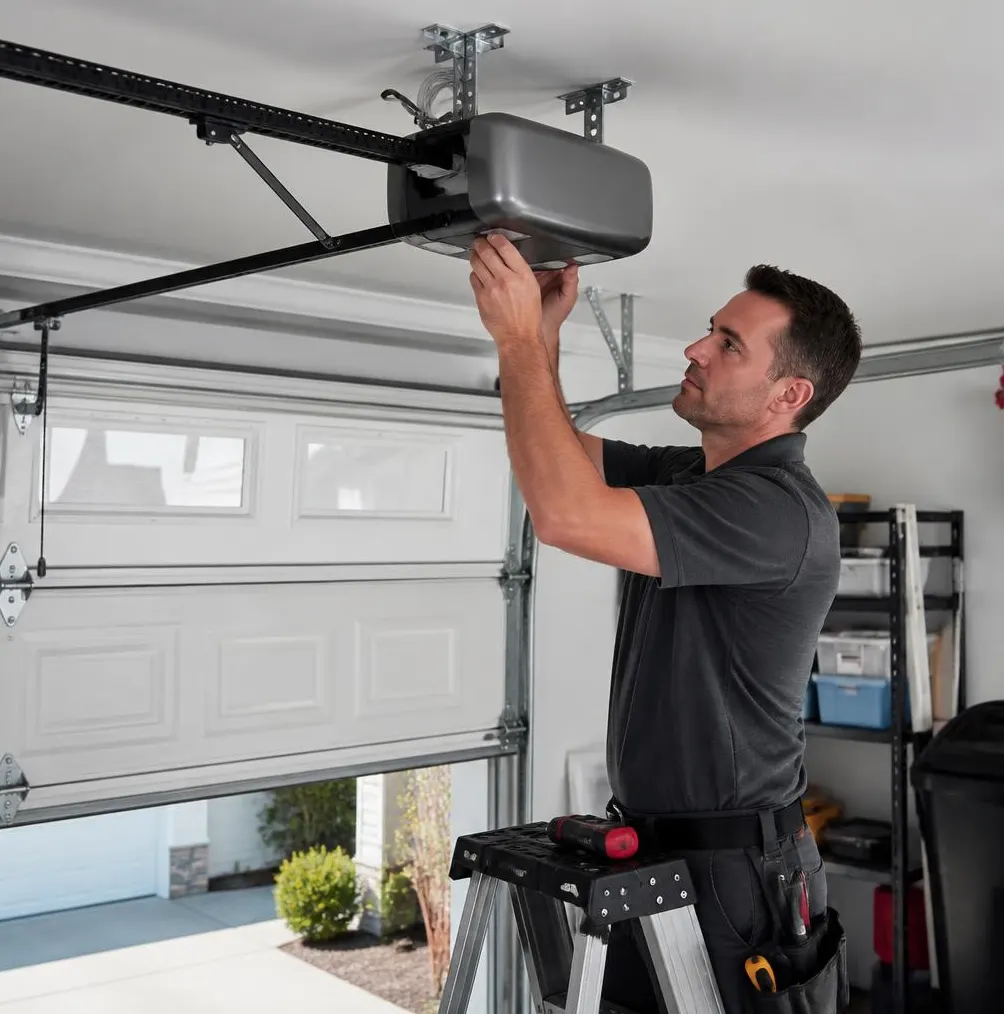
The Real Cost of Waiting Until Spring
A garage door that limps through one more winter without attention usually doesn't fail quietly. It fails on a cold, wet morning when you're already late — a spring snaps under the extra tension that moisture and chill put on steel, a sensor caked in dust refuses to see the beam, or water that's been seeping past a cracked seal for months finally swells a panel or rusts a track bolt loose. By the time any of that happens, you're not looking at a $10 weatherstrip or a $20 can of lubricant. You're looking at an emergency call, a door stuck open overnight, or a full spring replacement at several times the cost of the tune-up that would have prevented it.
What This Season Actually Does to a Garage Door Here
Inland Empire winters aren't brutal, but they bring real stress to garage door hardware. After months of dry heat and wildfire-season dust, the first real rains wash grit and ash straight into tracks and rollers, turning fine dust into a gritty paste that grinds down hardware every time the door opens. Overnight temperatures swing enough to stiffen torsion springs and thicken old grease, which is why doors often feel heavier or slower to open on cold mornings than they did in August. And houses built or retrofitted for earthquake resistance sometimes have garage door frames that shift slightly with seasonal moisture changes, which can throw off door alignment just enough to cause binding or uneven closing.
None of this is dramatic on its own. The problem is that it compounds — dust plus moisture plus cold plus a door nobody's looked at since spring equals the kind of multi-point failure that shows up as a jammed, off-track, or dead-silent garage door right when you need it most.
A Practical Pre-Winter Checklist
1. Replace the bottom seal if it's cracked or flattened
The rubber seal along the bottom of the door is your main defense against driving rain and standing water. If it's brittle, torn, or compressed flat, water will find its way under it. Replacement seals are inexpensive and most homeowners can swap them in under an hour.
2. Clean and lubricate tracks, rollers, and hinges
Wipe out the dust and debris sitting in the tracks before the rain turns it into sludge. Use a garage-door-specific lithium or silicone-based lubricant on rollers, hinges, and the torsion spring — not WD-40, which attracts dust rather than repelling it.
3. Check the weatherstripping around the frame
Side and top seals degrade from UV exposure over a long dry summer. Press along the frame for gaps where daylight or a draft gets through; those same gaps let in wind-driven rain.
4. Test the spring balance
Disconnect the opener, lift the door halfway by hand, and let go. It should stay roughly in place. If it drops or shoots up, the spring tension is off — a sign of wear that gets worse, not better, in cold weather. This is not a DIY repair; torsion springs are under enormous tension and should be left to a trained technician.
5. Inspect hardware for rust and loose bolts
Humidity speeds up corrosion on exposed bolts, hinges, and the bottom bracket. Snug anything loose and flag any rust spots before they spread.
6. Confirm the opener's safety sensors and battery backup
Dust buildup from the dry season can misalign the photo-eye sensors near the floor, causing the door to reverse unexpectedly or refuse to close. Wipe the lenses and make sure they're pointed directly at each other. If your opener has a battery backup, test it now — winter storms are when power outages and a stuck-open door tend to happen together.
7. Know how to use the manual release
If the power goes out during a storm, you'll want to know where the manual release cord is and how to disengage the opener to operate the door by hand. Test it once so it's not a mystery in the dark.
When to Call Yucaipa Garage Door Service
If your door is noticeably heavier, slower, or noisier since summer, if the spring balance test shows it's out of tune, or if sensors keep misfiring no matter how much you clean them, it's time to bring in a technician rather than keep troubleshooting. Our Garage Door Maintenance service covers a full inspection, lubrication, hardware tightening, and sensor alignment in one visit, and if a spring is already showing signs of fatigue, our Spring Replacement service gets it swapped out safely before it fails on its own schedule instead of yours.
Don't wait for the first storm to find out your garage door wasn't ready for it. Call Yucaipa Garage Door Service today and get your door squared away before winter settles in across Yucaipa, CA.