
What a Technician Sees on These Calls
The call usually comes in the morning after a windy night. The door won't open, or it opens but drags against a bent track. Sometimes there's a fist-sized dent punched into a panel where it flexed outward and caught the edge of the frame. Other times the torsion spring has already let go with a loud bang sometime after midnight, and the owner just assumes the opener died. On closer look, the real story is almost always the same: wind pressure found a weak point — a loose track bracket, a worn seal, an already-fatigued spring — and that part gave first.
Why the Garage Door Is the Weakest Wall in the House
Every other exterior wall in a typical home is a solid, braced assembly. The garage door opening is different — it's the single largest gap in the structure, closed off by a door made of lightweight panels riding in thin metal tracks. It's engineered for daily convenience, not for resisting sustained wind pressure the way a wall or a window is rated to.
When gusts push against a garage door, especially one with worn seals or gaps around the edges, air pressure can build up behind it. That pressure pushes the panels outward, strains the track brackets, and loads the springs in ways they weren't designed for during normal operation. In a strong enough event, a failed garage door can let wind inside the structure, which raises interior pressure and puts stress on the roof and walls from the inside out. That's the main reason insurers and builders treat this door differently from every other opening on the house.
Why This Matters Right Now
Fall in this part of the Inland Empire means Santa Ana wind season — dry, gusty air moving down out of the desert, often arriving with little warning and carrying a lot of dust with it. Those gusts hit garage doors directly, and the same dry stretch that brings the wind also means tracks and rollers have been collecting dust and debris for months with no rain to wash them out. Once the first winter rain does show up, a door that's already strained from wind and clogged with grit is in worse shape to handle it. Prepping now, before the wind picks up, is the easier and cheaper path.
Check the Hardware That Holds the Door to the House
- Track brackets and lag bolts: these anchor into the wall framing and can work loose over a long dry season as wood shrinks slightly. Loose brackets are usually the first thing to fail under wind load.
- Hinges and rollers: look for rust, cracked rollers, or hinges with elongated bolt holes — all signs the door has already been flexing more than it should.
- Seismic retrofit bracing: many homes in this area have had earthquake bracing added around the garage opening. Confirm that bracing hasn't loosened and that it isn't interfering with the track.
Check the Door Itself
- Panel condition: dents and rust spots weaken the metal's ability to flex and recover under pressure instead of buckling.
- Reinforcement struts: older sectional doors, especially wider double doors, often lack horizontal struts. Adding them is a straightforward upgrade that meaningfully increases wind resistance.
- Weatherstripping: cracked or sun-worn seals on the bottom and sides let wind-driven dust and rain in, and they also let pressure build behind the door in a gust. Replacing them is inexpensive compared to the strain it saves on the rest of the system.
Check the Spring and Opener
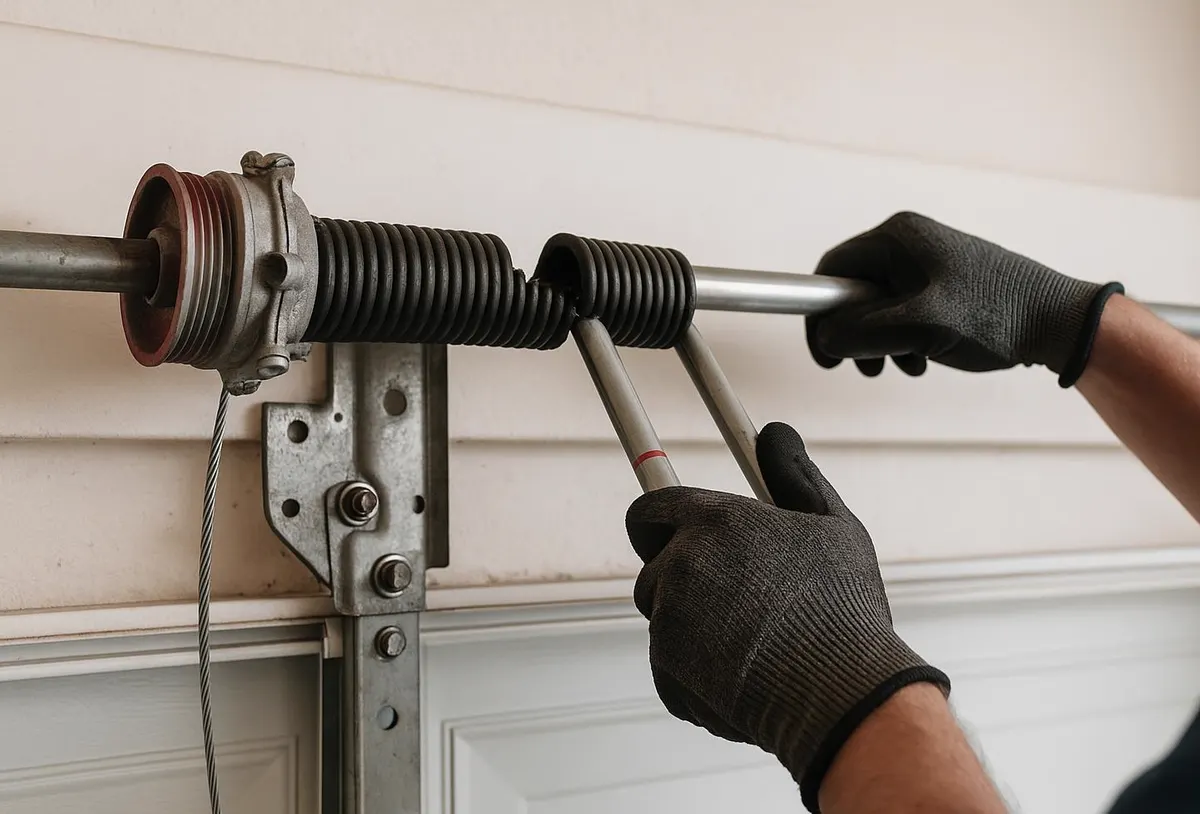
- Torsion springs: springs under extra wind load work harder every cycle. A spring near the end of its life is far more likely to snap during a windy stretch than on a calm day.
- Opener force settings: if the opener is straining, reversing unexpectedly, or making grinding noises when the door meets resistance, it may be fighting wind pressure or a binding track rather than a motor problem.
- Manual release cord: confirm it still works smoothly — storms sometimes bring power outages, and you'll want a reliable manual option if the opener is out.
When to Call Yucaipa Garage Door Service
If you're hearing new noises from the spring, noticing the door sticking or sagging on one side, or you simply haven't had the hardware checked in a few years, it's worth getting ahead of wind season rather than reacting to a 2 a.m. failure. Our Garage Door Maintenance visits cover track alignment, hardware tightening, and seal replacement, and if a spring is already showing wear, our Spring Replacement service gets it swapped before it fails under added load. We also run Emergency Garage Door Service for anyone who gets caught off guard by a storm.
Call Yucaipa Garage Door Service today to get your door checked before the next round of wind and rain moves through Yucaipa, CA.